
Online MSW Degree: Advanced Standing
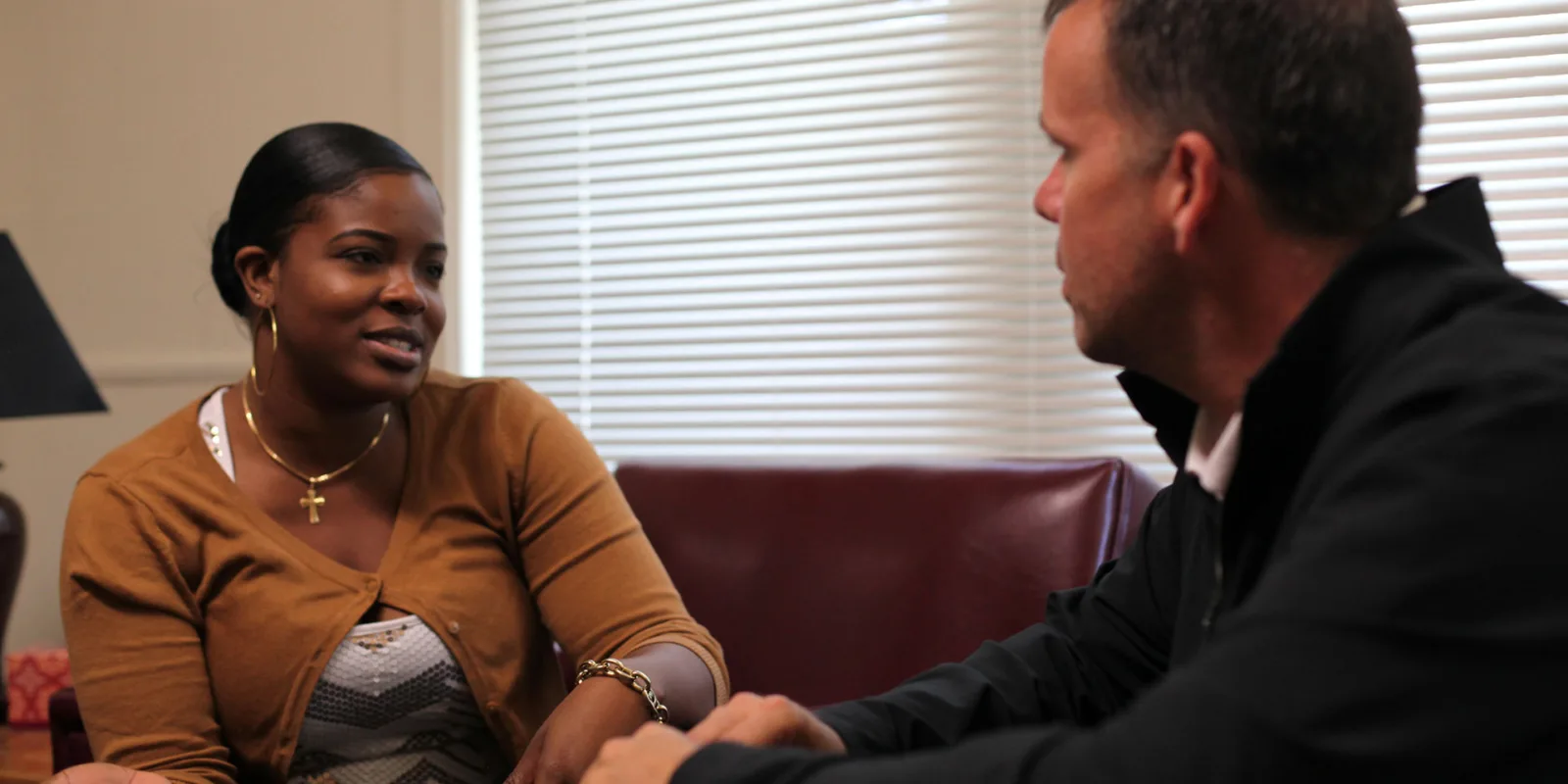
Discover a Faster Route to an MSW Degree
Online
2 years
36 Credit Hours
$1020 Cost Per Credit
Request More Information
Complete this form to receive information about coursework, admissions, tuition, and more.
Accelerate Your Path to Advanced Social Work Practice
Widener University’s online Advanced Standing MSW lets you build directly on a CSWE-accredited BSW earned in the last six years instead of repeating it. The 36-credit program condenses your path to an MSW into 12 courses, so you can complete your degree in as few as two years with seven fewer courses than a traditional track – and save $21,000 in tuition.
Coursework is delivered fully online and asynchronously, with no residency requirements, so you can keep working while you study. You’ll experience a clinically focused, trauma-informed curriculum, including our Treating Trauma course, which prepares you to recognize and respond to trauma’s effects across the populations you serve.
As you move through the program, you’ll sharpen the clinical skills, systems thinking, and professional judgment that expand your impact and open doors to advanced practice. Widener is recognized among the Best Schools for Social Work by U.S. News & World Report (2026).1
Program Benefits
- 12 courses, complete in as few as two years
- Save $21,000 in tuition compared with the Regular Standing track
- Specialization-level field experience with personalized placement support
- Optional Trauma Certificate available
- No application fee
Advanced Standing. Enhanced Abilities.
12 Courses
36 Credit Hours
Social workers address pressing concerns in every community, and our online MSW equips you with skills for making an immediate difference. The Advanced Standing track includes 12 courses — seven fewer than the Regular Standing track. Throughout the program, you’ll explore clinical social work practice, organizational development, and other concepts that prepare you to move from entry-level to advanced social work positions. You’ll also complete field experiences to apply your knowledge and skills in an agency-based social work setting.
Curriculum DetailsCourse Highlights
This concentration level course is designed to build on the practice of generalist social work by refining and deepening the conceptual and technical knowledge of clinical social work practice with individuals. Students will continue to consider principles and assumptions learned in the foundation year with the goal of achieving synthesis on a more advanced level of knowledge, attitude, skill and method. The clinical processes of engagement, biopsychosocial assessment, worker-client relationship, intervention, evaluating practice effectiveness, and termination are considered with an aim toward greater precision of application. More complex theoretical material and intervention methods as well as case situations are utilized and you are encouraged to reflect on past field experience for integration of material. Throughout the semester, attention is given to issues of gender; sexual orientation; and ethnic, racial, and cultural diversity.
Prerequisites: SW 639 and SW 637.
Course outcomes:
- Apply differential assessment with various populations to identify treatment focus and intervention options. Analyze multiple theoretical perspectives and differentially apply them to client situations.
- Apply theoretical conceptualization to design practice interventions.
- Identify the interpersonal dynamics and contextual factors that both strengthen and potentially threaten the therapeutic alliance.
- Demonstrate acute awareness of the needs of oppressed and disadvantaged populations and of ways in which the clinical process is modified to respond to those needs.
- Employ an ecological framework to conceptualize the influence of institutional policies and practices on the clinical social work process with a view toward mobilizing forces for organizational and social as well as individual change.
- Evaluate the effectiveness of practice including the application of theoretical and intervention models as they meet the needs of the client and affect the therapeutic relationship.
Focusing on social work practice with families, this course expands systemic thinking by introducing multiple models for family work, including Psychodynamic, Bowen, Narrative, Communication, Contextual, Structural, and Solution-Focused, as well as newer models of family work such as Multidimensional Family Therapy. Using these models and their related theories, students will gain a solid foundation for assessment and intervention with families, knowledge of the family life cycle, and the impact of wider systems on a family’s structure and functioning. The definition of family will be inclusive of many different family forms. Students will examine how cultural issues such as class, race, ethnicity, gender, and sexual orientation must be considered while assessing a family’s presenting issues, unique strengths, and vulnerabilities. Students will learn to think critically about the relevance of particular concepts and interventions for each family system, including whether certain “Western” concepts apply to all families.
3 credit hours each
These courses comprise the two-semester concentration-level field placement. Students work in a supervised social work setting for three days (24 hours) per week for a total of 680 hours for the year. Field Instruction III and Seminar and Field Instruction IV and Seminar provide students with the opportunity to further examine and integrate the theories and skills of agency-based clinical social work practice with individuals, families, and small groups; to develop and refine clinical assessment, intervention, and evaluation skills; and to consolidate their own identity as a professionally disciplined and self-aware professional social worker. Field Instruction III and Seminar and Field Instruction IV and Seminar build upon the generalist social work practice perspective introduced in the prerequisite courses.
Prerequisites: SW 630 and SW 639.
For more detailed information about the MSW Field Experience.
Course outcomes:
- Integrate classroom material in the field.
- Reflect on practice in the field.
- Engage in clinical supervision.
- Reflect on use of self in the therapeutic relationship.
- Critically analyze and apply evidence-based practice.
- Evaluate your own practice.
- Demonstrate knowledge of policy and contextual issues that impact practice.
This course concentrates on the etiology and treatment of traumatic symptomatology. Students explore conditions that contribute to the development of acute stress disorder, post-traumatic stress disorder, borderline personality disorder, dissociative disorders, and other disorders of extreme stress. Comorbid conditions, including substance abuse and self-harming behaviors, are considered. The intergenerational, socio-cultural, and societal impact of trauma is explored. A strengths-based approach is emphasized. Readings orient students to the assessment of trauma symptoms, as well as to some generally applicable treatment approaches, and to research on the psychobiology of trauma.
Course outcomes:
- Demonstrate an understanding of the factors that contribute to the development of traumatic symptomatology and stress disorders.
- Demonstrate integration of the knowledge needed to assess traumatic symptomatology.
- Demonstrate an understanding of the impact of trauma on psychobiology.
- Demonstrate a general understanding of a variety of treatment approaches, including the ability to incorporate unique client strengths and resources into chosen treatment approaches.
- Demonstrate the analytical skills needed to integrate theories into trauma treatment.
- Demonstrate the ability to make use of professional literature.
- Demonstrate an understanding of personal and professional strategies for minimizing the risks of vicarious traumatization.
- Demonstrate an understanding of the intergenerational, cultural, and societal impact of trauma.

Is the Advanced Standing Track Right for You?
Unlike Regular Standing, which welcomes applicants from any undergraduate background, Advanced Standing is built exclusively for social work professionals who already have a BSW foundation. You may be a strong fit if:
- You hold a CSWE-accredited BSW earned within the last six years
- You want to begin with advanced, concentration-level coursework instead of repeating the generalist foundation
- You are ready to deepen your clinical skills and expand your professional impact
- You need a structured, part-time online program that works around your job and personal responsibilities
- You are working toward social work licensure* and want to keep your momentum going
If you check most of these boxes, you’re likely ready for Advanced Standing. Request more information today to confirm your eligibility and next steps.
Start Your Application Today
Application Deadline 12/01/2026
Start Date 01/11/2027
If you’re seeking an online MSW degree with a supportive admissions process, Widener is for you. We offer three start dates each year, helping you continue your education when it works for you. Thanks to our Advanced Standing track, students seeking an online MSW program can complete the program in their desired timeframe. Advanced Standing admission is available to students who earned a Bachelor of Social Work from a CSWE-accredited program in the last six years.
| Online Application Form | Apply Now |
|---|---|
| Degree | A CSWE-accredited BSW earned within the last six years |
| Minimum GPA | An overall undergraduate GPA of at least 3.0 with a minimum 3.3 GPA in your major courses |
| Transcripts | Official college transcripts from each school you’ve attended. |
| Statement of purpose | This statement of Purpose consists of 4 to 6 pages and includes your Personal Background, Career Objectives, Readiness for Rigor and Time Management Plan and a Personal Evaluation. |
| Letters of recommendation | Two letters of recommendation, with one provided by a BSW field instructor or field director. |
| Résumé | Required |
| Additional Requirements | Advanced Standing Applicants: Admissions Interview* |
*A Final Field Evaluation may be requested at the discretion of the MSW Admissions Committee
Admission DetailsFrequently Asked Questions
Explore our frequently asked questions for in-depth answers. If you don’t find what you’re looking for, reach out to us.
Our Advanced Standing track is available to applicants who completed a CSWE-accredited bachelor’s in social work in the last six years. The program includes 12 courses, comprised of core courses, advanced concentration courses, and two electives. Visit the Curriculum page to learn more.
Yes. The Regular Standing track takes an average of three years to complete. Meanwhile, the Advanced Standing track is an online MSW program that students with a CSWE-accredited Bachelor of Social Work can complete in two years.
We designed the Advanced Standing track for established social work practitioners wanting to complete an MSW program online. A CSWE-accredited BSW earned in the last six years is required. By contrast, the Regular Standing track is available to applicants with a bachelor’s degree in any field from a regionally accredited university. Visit the Admissions page for more details.
Yes. Tuition for the Advanced Standing track is $36,000, compared to $57,000 for the Regular Standing track. For more details, visit the Tuition page.
In addition to the basic admission requirements, Advanced Standing applicants must meet these requirements:
- Baccalaureate degree from a social work program with accreditation from the Council on Social Work Education (CSWE), earned within six years from the date of matriculation
- An overall GPA of 3.0 or better, and a GPA of 3.3 in the social work major
- Statement of purpose
- Two letters of recommendation; one letter must be from a BSW field instructor or field director
- Official transcripts from every institution attended
- International students: TOEFL score of 75 or higher
The online MSW has no GMAT or GRE requirements. You can learn more on the Admissions page.
Source and Disclaimer
- U.S. News & World Report. “Widener University’s Graduate School Rankings.” Retrieved September 8, 2026, from https://www.usnews.com/best-graduate-schools/widener-university-216852/overall-rankings
*Licensure requirements vary by state. Students are responsible for understanding social work licensure requirements within their state.